
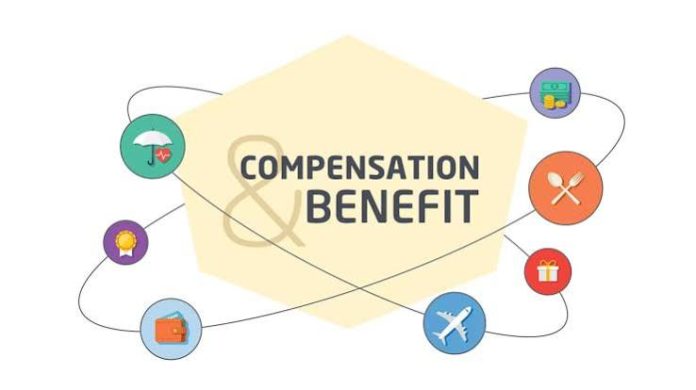

Total Compensation: Beyond the Base Salary
The total compensation perspective that most accurately characterises what employees actually receive and what employers actually spend on each employee: the combination of base salary (the fixed cash component paid per period regardless of performance), variable compensation (the bonuses, commissions, or performance payments tied to individual or company results), equity compensation (the stock options, RSUs, or profit-sharing that gives employees an ownership stake in the business’s value creation), and benefits (the health insurance, retirement plan contributions, paid time off, and other non-cash components of the employment relationship). The organisation that communicates only base salary as the employee’s compensation is presenting an incomplete picture that underrepresents what the employer provides and undervalues the employment relationship in the employee’s perception.
The total compensation design principle that most efficiently allocates the compensation budget toward the elements that most influence talent attraction and retention: the employee preference research that reveals which compensation components are most and least valued by the specific employee population or talent market. The organisation that spends a large portion of its total compensation budget on benefits that employees rarely use or do not value highly while offering below-market base salaries in a market where employees prioritise base salary is misallocating its compensation budget. The employee preference survey, combined with competitive market data, directs spending toward the components that most influence the attraction and retention of the specific talent the organisation needs.
Designing a Competitive Pay Structure
The pay structure design elements that most determine whether the compensation system is both competitive and internally equitable: the job evaluation process that assesses the relative value of different roles within the organisation (establishing the internal equity that ensures that roles of comparable complexity and contribution are compensated comparably), the market data benchmarking that calibrates each role’s pay range against what comparable roles pay in the relevant talent market (establishing the external competitiveness that determines whether the organisation can attract and retain talent in its specific hiring markets), and the pay band structure that establishes the minimum, midpoint, and maximum of the pay range for each role family and level (enabling consistent pay decisions that explain the variation in pay within and between roles).
The pay range calibration decision that most affects talent attraction in competitive markets: the market positioning target that determines what percentile of the market the organisation aims to pay at. The organisation that targets the 50th percentile (paying at the median of the market) will attract talent who are comfortable at the middle of the market; the one that targets the 75th percentile will attract a broader pool of candidates but at higher cost; and the one that cannot afford above-market base salaries may compete on total compensation through equity, benefits, or non-monetary factors that its target candidates value.
Benefits That Employees Actually Value
The benefits categories that most consistently appear as high-value in employee satisfaction surveys: health insurance (consistently the most valued benefit, with employees particularly sensitive to the premium cost they share and the quality of the network and coverage), retirement plan contributions (particularly the employer match that represents immediate guaranteed return on the employee’s contribution), and paid time off (including vacation days, sick leave, and parental leave, which employees in many markets are increasingly evaluating as a primary employment consideration alongside compensation).
The benefits evolution that most reflects changing employee priorities in the post-pandemic workplace: the flexibility and remote work policy that has moved from a perk to a primary employment consideration for knowledge workers who experienced the autonomy of remote work and who evaluate new roles in part based on the degree of flexibility they maintain. The organisation that offers a fully flexible work arrangement with no required office attendance is offering a benefit with genuine financial value to employees who no longer commute — a value that some employees would accept lower base compensation to preserve. The benefit that is difficult to price in a compensation statement but that profoundly affects talent attraction and retention in competitive knowledge-worker markets.
Equity Compensation in Private Companies
The equity compensation design for private companies that most effectively aligns employee interest with company value creation: the stock option grant that gives employees the right to purchase company equity at the current fair market value (the exercise or strike price), with vesting over a defined period, so that the employee benefits from any appreciation in company value that occurs after the grant date. The employee who receives options at a one-dollar exercise price and whose company is later valued at ten dollars per share has the opportunity to purchase shares for one dollar that are worth ten — a potential financial benefit that directly reflects the value creation the employee contributed to.
The equity compensation communication investment that most determines whether equity grants produce the motivational benefit they are intended to create: the employee education that helps employees understand what their equity is actually worth, under what scenarios, and what actions on their part affect that value. The employee who receives an equity grant but does not understand whether the options are exercisable, what the dilution from future funding rounds means for their percentage ownership, or what events could create a liquidity opportunity has received an employment benefit that produces minimal motivation. The transparent equity communication that demystifies the grant, quantifies its potential value under different scenarios, and connects the employee’s contribution to outcomes that affect that value is the communication investment that converts the equity grant from a line on a benefits statement to a genuine motivational instrument.
Pay Equity and Transparency
The pay equity challenge that most organisations that examine their pay data carefully discover: the unexplained pay variation by gender, race, or other demographic characteristics that is not explained by legitimate factors like role, performance, tenure, or geographic location. The pay equity audit that compares compensation across demographic groups, controls for the legitimate factors that explain pay variation, and identifies the residual variation that is attributable to demographic characteristics rather than job-related factors is both a legal compliance requirement in many jurisdictions and an ethical responsibility for organisations that have stated commitments to equal treatment.
The pay transparency trend that most clearly defines the direction of compensation practice in the coming decade: the legislated requirement for employers to disclose salary ranges in job postings, which has already been enacted in New York, California, Colorado, and Washington and is expanding to additional jurisdictions. The pay transparency requirement that reveals salary ranges to candidates and current employees simultaneously changes the negotiation dynamic (candidates can assess offers against the full range rather than against their current salary), creates pressure to explain pay variation within ranges to current employees who compare their pay to the posted range, and accelerates the internal pay equity conversations that many organisations have avoided by keeping compensation information confidential.