
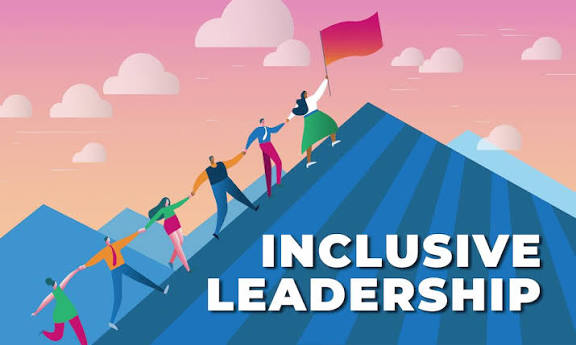

What Inclusive Leadership Is and Is Not
The inclusive leadership misconception that most limits its effectiveness when organisations adopt it as a concept: the equation of inclusivity with the avoidance of obvious exclusion — ensuring that no one is overtly discriminated against or marginalised. This is necessary but not sufficient. Inclusive leadership in its full meaning is the active creation of conditions where every team member can contribute fully — where their perspective is sought, their contribution is heard, their disagreement is welcomed, and their development is invested in — regardless of whether they belong to any particular demographic group. The team that has not overtly excluded anyone but that has consistently ignored certain voices in meetings, consistently not considered certain perspectives in decisions, and consistently overlooked certain team members for high-profile assignments has not achieved inclusive leadership.
The inclusive leadership research finding that most compellingly connects the concept to business performance rather than ethical obligation: the consistent finding that teams with greater cognitive diversity — teams that contain members with different knowledge, perspectives, backgrounds, and problem-solving approaches — produce better solutions to complex, non-routine problems than more homogeneous teams. The diverse team that actually leverages its diversity, where the different perspectives are elicited, heard, and genuinely considered rather than tokenistically represented, outperforms the homogeneous team and outperforms the diverse team whose diversity is structurally present but culturally suppressed. Inclusion is what converts diversity from a representation metric into a performance advantage.
Recognising Patterns of Exclusion
The exclusion patterns that most commonly appear in teams that consider themselves inclusive: the meeting dynamics where certain voices consistently speak more and certain voices consistently speak less, where certain ideas are enthusiastically adopted and credited to the person who stated them while equivalent ideas from other team members are received with less enthusiasm or adopted later without attribution, and where certain questions are treated as naive while equivalent questions from others are treated as insightful. These patterns are typically not the result of conscious bias but of the social dynamics that consistently advantage some profiles and disadvantage others — and they are not visible to those who are advantaged by them in the way they are visible to those who are disadvantaged.
The exclusion signal that most clearly reveals whether a specific team member is experiencing psychological safety adequate for full contribution: the quality and candour of their participation in discussions where disagreement is possible. The team member who consistently agrees with the leader’s stated position, who does not raise concerns about decisions that the team is making, and who does not challenge assumptions even when they have reservations is either genuinely aligned or insufficiently safe to express disagreement — and the inclusive leader who cannot tell which it is has not yet created the conditions for genuine candour.
The Inclusive Leader’s Practices
The inclusive leadership practices that most consistently create the psychological safety that enables full contribution: the explicit invitation for perspectives that have not yet been heard in a discussion (the question that specifically asks to hear from the people who have not yet spoken, or the meeting structure that solicits individual perspectives before group discussion to prevent the first speaker’s framing from dominating the subsequent contributions), the demonstration of genuine curiosity about perspectives that differ from the leader’s own initial view (the response to a challenge to the leader’s position that engages with the substance of the challenge rather than defending the original position before it has been genuinely considered), and the consistent attribution of ideas to the team members who contributed them rather than the attribution pattern that consistently credits those with the most seniority or the most confidence.
The inclusive leadership behaviour that most effectively signals to the team that different perspectives are genuinely valued: the leader’s visible updating of their position in response to input from a team member with less power or seniority. The leader who is seen to change their view because a junior team member made a persuasive case demonstrates more powerfully than any statement that junior voices genuinely matter. The leader who always reaches the conclusion they began with regardless of the input they received has demonstrated — again, more powerfully than any statement — that consultation is a ritual rather than a genuine input to decision-making.
Developing Inclusive Hiring and Advancement Practices
The hiring practice that most clearly affects diversity outcomes: the structured interview process that uses the same standardised questions for all candidates, with scored evaluation rubrics that assess candidates against the specific competencies the role requires. The unstructured interview that varies by candidate — where some candidates are asked about their approach to conflict and others about their leadership philosophy — is not a valid comparison of candidates and tends to advantage the candidates who most resemble the interviewer’s mental model of the successful incumbent. The structured interview that applies the same questions and the same evaluation criteria to all candidates is more valid as an assessment tool and less susceptible to the pattern-matching bias that produces homogeneous hiring outcomes.
The advancement practice that most commonly produces the demographic concentration at leadership levels that does not reflect the demographic diversity at entry levels: the sponsorship gap. The mentoring relationship that provides career advice and development feedback is helpful but does not require the sponsor to take personal risk on behalf of the mentee. The sponsorship relationship that requires the sponsor to actively advocate for the sponsee in the conversations where advancement decisions are made — putting their own reputation behind their sponsee’s candidacy — is the relationship that accelerates advancement. The distribution of sponsorship relationships in most organisations is not demographically representative — and the systematic identification and matching of sponsors and sponsees from underrepresented groups is the talent development investment that most directly addresses the advancement gap.
Measuring Inclusive Leadership Effectiveness
The inclusive leadership measurement approach that most honestly reveals whether the leader is creating conditions for full contribution rather than merely demonstrating inclusive behaviour: the anonymous team survey that asks team members to assess the specific behaviours that indicate inclusion (do you feel that your perspective is genuinely considered in team decisions? do you feel safe raising concerns or disagreeing with team decisions? do you believe that recognition and advancement opportunities are distributed fairly on your team?) rather than asking them to evaluate the leader’s general effectiveness. The specific behavioural questions produce the diagnostic data that identifies specific inclusion gaps; the general effectiveness question produces the overall evaluation that does not.
The inclusion gap closing process that most effectively translates survey findings into behavioural change: the leader’s public acknowledgement of the specific gaps the survey identified, their specific commitment to the behaviour changes they will make, and their request for feedback on whether the changes they have made are producing the intended effect. The leader who treats the survey result as diagnostic data for their own development rather than as a performance evaluation to be managed communicates the growth mindset that demonstrates the authentic commitment to inclusion that team members can distinguish from the performative inclusion that responds to incentive structures rather than genuine values.